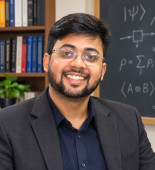
Shubhayan Sarkar
Assistant Professor
Shubhayan Sarkar
Assistant Professor, Physical Sciences
PhD: Center for theoretical Physics at the Polish Academy of Sciences, Warsaw, Poland, 2023
Research interests:
Quantum Information, Quantum foundations, Device-independent quantum physics, Quantum networks, Quantum cryptography, Quantum machine learning.
Contact:
| Address: |
Physical Sciences Unified Academic Campus Bose Institute EN-80, Sector V Bidhan Nagar Kolkata - 700 091, India |
| E-Mail: | shubhayan.sarkar[at]jcbose.ac.in |
Research:
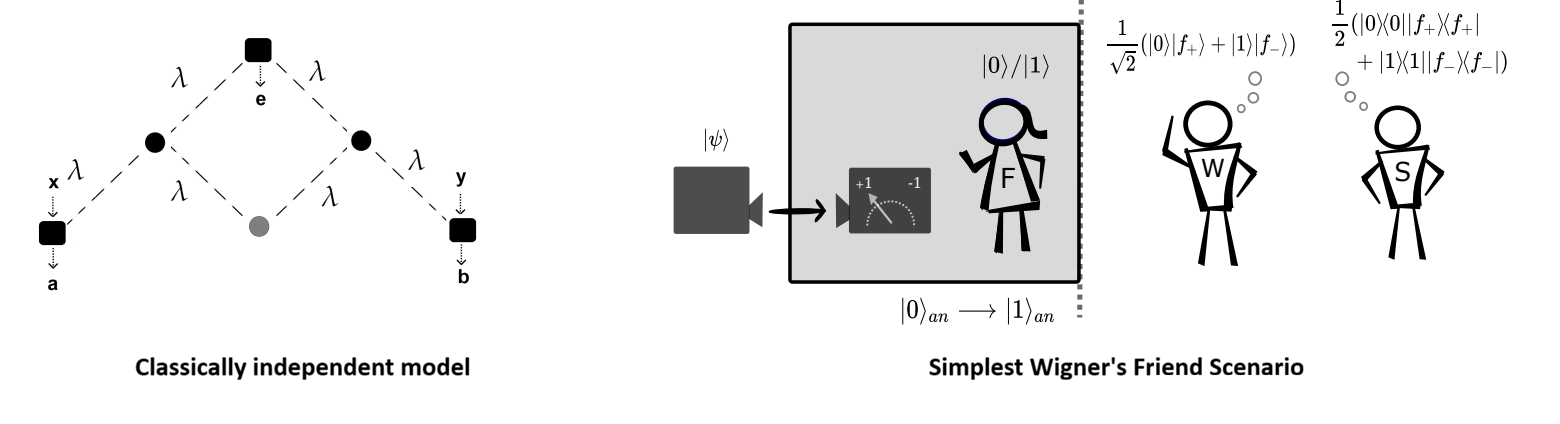
1. Quantum Foundations: While quantum theory is mathematically the best description of the microscopic world, the physical understanding of the theory remains unknown. I particularly work on the problem what is quantum?, i.e., identifying the nonclassical of a particular quantum statistics or is quantum theory universal (applicable to any physical system)? Recently, I am also starting to work on quantum gravity. Some of my notable works on quantum foundations, include finding a new notion of quantumness beyond Bell's notion of nonlocality and finding the simplest scenario to operationally show that quantum theory might not be universal using the Wigner's friend framework. Beyond this I also work on the mathematical aspects of quantum theory such as resource theories.
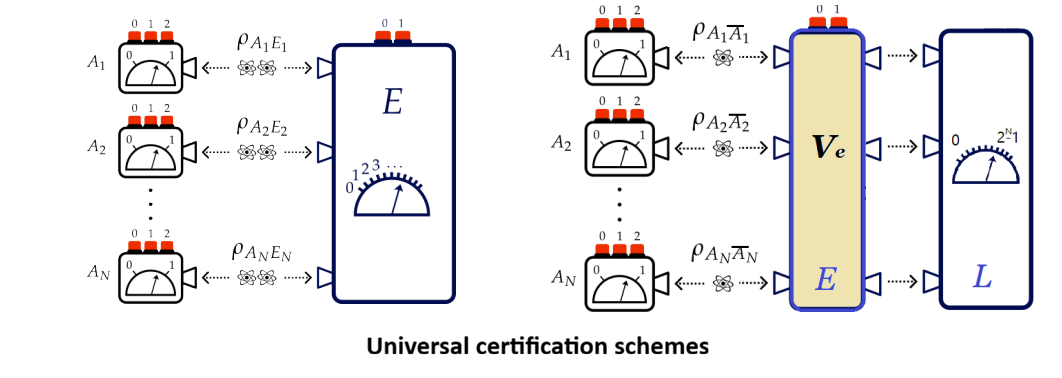
2. Device-independent quantum information: When quantum devices arrive in the market in future, a major obstacle is to adopt these devices is to certify them without trusting the companies selling them. Device-independent certification is the most secure way to certify quantum devices without trusting any component of the setup. Some notable works of mine in this area is proposing such certification schemes for any quantum state, measurement and unitaries.
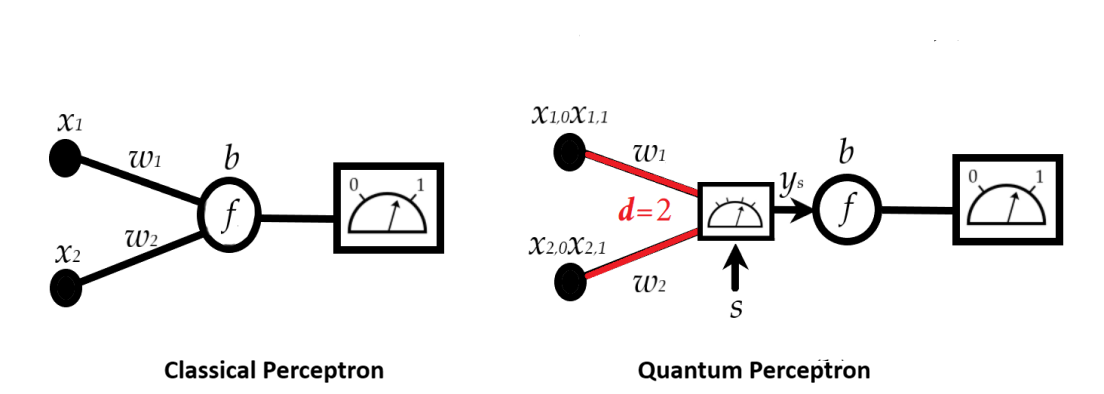
3. Quantum cryptography and neural networks: Encrypting messages is one of the most important tasks in the current digital infrastructure. When quantum computers would arrive, the current encryption schemes would be easily hackable. Using quantum particles, one can find a secure way to encrypt messages, this subfield of study is called quantum cryptography or QKD. Some of my notable works in this area are finding that trusting one parties, significantly makes the QKD schemes more secure and practical, while disproving a 20 year old conjecture, to show that every entangled state can not be used to generate secure key in a practical setting. Quantum neural networks (QNN), which is the neural network (the backbone to ChatGPT or Claude, or any other such LLM's) based on quantum particles. It is not a well-explored area in quantum information science as no known genuine advantage of QNN was known up until now. Recently, I showed that there is an information-theoretic universal advantage of a quantum perceptron (the basic unit of any neural network) in its predictive power, when both classical and quantum NN learn the same.
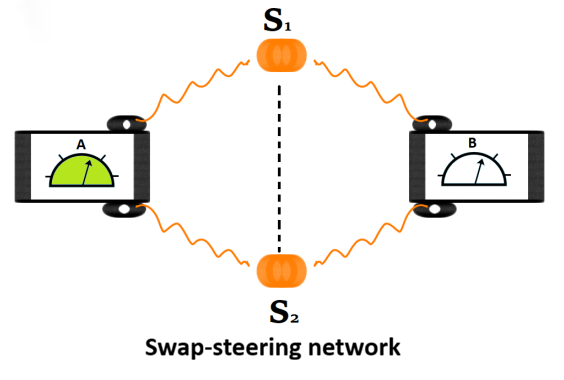
4. Quantum networks: Quantum networks with multiple sources allow observation of quantum effects that can not be realised with single sources. It was believed that quantum nonlocality between two parties can not be witnessed when single measurements are employed by both parties. Recently, I introduced a notion of quantum steering, a weaker form of quantum nonlocality, in networks with single measurements per party, called swap-steering. Using this network, I showed that one can extract randomness from the measurement without trusting the device and no-seed randomness is required to do so. Thus, practically secure random number generators can be made without any randomness to begin with, which was a major issue in any of the previous known ways.
Publications:
1. Any Unitary Gate Can Be Certified Device-Independently in a Quantum Network,
Shubhayan Sarkar
Phys. Rev. Lett. 137, 030802 (2026).
2. Gap between quantum theory based on real and complex numbers is arbitrarily
large,
Shubhayan Sarkar, David Trillo, Marc Olivier Renou and Remigiusz Augusiak,
Rep. Prog. Phys. 89 070503 (2026).
3. One-sided DI-QKD secure against coherent attacks over long distances,
Shubhayan Sarkar
New J. Phys. 28 064503 (2026).
4. Witnessing network steerability of every bipartite entangled state without inputs,
Shubhayan Sarkar
Phys. Rev. A 113, 032212 (2026).
5. A universal scheme to self-test any quantum state and measurement,
Shubhayan Sarkar, Alexandre C. Orthey Jr., Remigiusz Augusiak,
Nature Physics 22, 446–451 (2026).
6. Almost device-independent certification of multipartite quantum states with mini-
mal measurements,
Shubhayan Sarkar, Alexandre C. Orthey Jr., Gautam Sharma, Saronath Halder, Remigiusz
Augusiak,
Phys. Rev. Applied 25, 034019(2026).
7. Witnessing network steerability of every bipartite entangled state without inputs,
Shubhayan Sarkar
Phys. Rev. A 113, 032212 (2026).
8. Topologically noise robust network steering without inputs,
Dhruv Baheti, Shubhayan Sarkar
Phys. Rev. A 113, 012607(2026).
9. Shared randomness allows violation of macroscopic realism using a single measure-
ment,
Shubhayan Sarkar
APL Quantum 2, 026128 (2025).
10. Self-testing composite measurements and bound entangled state in a single quan-
tum network,
Shubhayan Sarkar,Chandan Datta, Saronath Halder, Remigiusz Augusiak
Phys. Rev. Lett. 134, 190203 (2025).
11. Operational advantage of quantum resources in a semi-device independent frame-
work,
Shubhayan Sarkar, Chandan Datta,
Phys. Rev. A (Letter) 111, L040402 (2025).
12. Certification of unbounded randomness with arbitrary noise,
Shubhayan Sarkar
Phys. Rev. A (Letter) 111, L010201 (2025).
13. Network quantum steering enables randomness certification without seed random-
ness,
Shubhayan Sarkar,
Quantum 8, 1419 (2024).
14. Model-independent inference of quantum interaction from statistics,
Shubhayan Sarkar
Phys. Rev. A 110, L020402 (2024).
15. Causal links between operationally independent events in quantum theory,
Shubhayan Sarkar
Phys. Rev. A 109, L040202 (2024).
16. Distrustful quantum steering,
Shubhayan Sarkar
Phys. Rev. A 108, L040401 (2023).
17. Universal notion of classicality based on ontological framework,
Shubhayan Sarkar
Found Phys 53, 47 (2023).
18. Device-independent certification of maximal randomness from pure entangled two-
qutrit states using non-projective measurements,
Jakub Jan Borkała, Chellasamy Jebarathinam, Shubhayan Sarkar, Remigiusz Augu-
siak,
Entropy 24(3), 350 (2022).
19. Self-testing of multipartite GHZ states of arbitrary local dimension with arbitrary
number of measurements per party,
Shubhayan Sarkar, Remigiusz Augusiak,
Phys. Rev. A 105, 032416 (2022).
20. Self-testing of any pure entangled state with minimal number of measurements
and optimal randomness certification in one-sided device-independent scenario,
Shubhayan Sarkar, Jakub J. Borkała, Chellasamy Jebarathinam, Owidiusz Makuta,
Debashis Saha, Remigiusz Augusiak,
Physical Review Applied 19, 034038 (2023).
21. Probing measurement problem of quantum theory with an operational approach,
Shubhayan Sarkar, Debashis Saha,
Phys. Rev. A 107, 022226 (2023).
22. Certification of incompatible measurements using quantum steering,
Shubhayan Sarkar, Debashis Saha, Remigiusz Augusiak,
Phys. Rev. A (Letter) 106, L040402 (2022).
23. Self-testing quantum systems of arbitrary local dimension with minimal number of
measurements,
Shubhayan Sarkar, Debashis Saha, Jędrzej Kaniewski, Remigiusz Augusiak,
npj Quantum Information 7, 151 (2021).
24. Universal notion of classicality based on ontological framework,
Shubhayan Sarkar,
Found Phys 53, 47 (2023).
25. Emergence of Cooperation in the thermodynamic limit,
Colin Benjamin,Shubhayan Sarkar,
Chaos, Solitons and Fractals, 135, 109762 (2020).
26. Triggers for cooperative behavior in the thermodynamic limit: a case study in Public
goods game,
Colin Benjamin,Shubhayan Sarkar,
Chaos 29, 053131 (2019).
27. Quantum Nash equilibrium in the thermodynamic limit,
Shubhayan Sarkar, Colin Benjamin,
Quantum Inf Process 18, 122 (2019).
28. Entanglement makes free riding redundant in the thermodynamic limit,
Shubhayan Sarkar, Colin Benjamin,
Physica A: Statistical Mechanics and its Applications, 521, 607 (2019).
29. Entropy as a bound for expectation values and variances of a general quantum me-
chanical observable,
Shubhayan Sarkar,
International Journal of Quantum Information, 16 1850036 (2018).
30. Can quantum correlations increase in a quantum communication task?
Shubhayan Sarkar, Chandan Datta,
Quantum Inf Process 17, 248 (2018)
View MoreRecognition:
- Kishore Vaigyanik Protsahan Yojana (KVPY) Fellow, 2014-2018
- Inspire Fellow, 2013-2014
Teaching:
Students:
| Image | Name | Designation | Department | Campus | Contact number |
|---|